

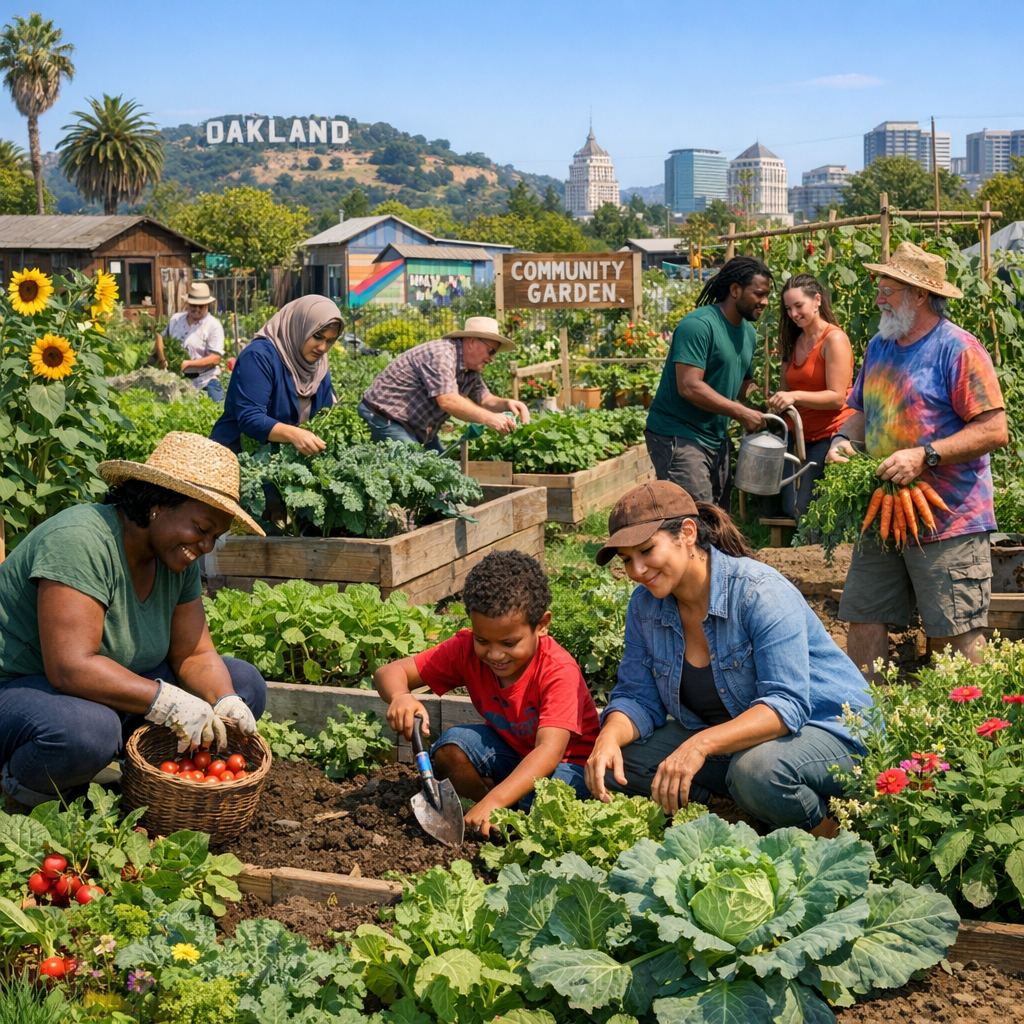
In the heart of Oakland, community gardens are more than just plots of land; they are vibrant spaces where residents come together to cultivate not only plants but also relationships and a sense of belonging. These gardens offer fresh produce, educational opportunities, and a green respite from urban life.
The Growth of Community Gardens in Oakland
Oakland’s commitment to urban agriculture is evident in its support for numerous community gardens across the city. The City of Oakland’s Community Gardens Program manages 16 community gardens and 17 youth programs citywide, providing residents with opportunities to grow organic flowers, fruits, vegetables, and herbs. These spaces are designed to bring people of all ages and diverse backgrounds together, fostering a sense of community and shared purpose. [Source: City of Oakland Community Gardens Program]
Opportunities for Involvement
For those interested in getting involved, the city offers various avenues. Residents can volunteer in existing gardens, rent plots for personal cultivation, or participate in youth gardening programs through schools and recreation centers. The program emphasizes active participation, requiring members to commit to a minimum of 30 hours per year for the management, maintenance, and upkeep of the community garden outside of individual plots. [Source: Community Gardening Rules]
Spotlight on Local Initiatives
Several local organizations have taken the initiative to create and maintain community gardens, each with its unique focus:
- City Slicker Farms: Located in West Oakland, City Slicker Farms operates a community garden that serves as an urban oasis. Visitors can engage with organic farming practices, interact with resident chickens, and participate in educational programs. [Source: City Slicker Farms]
- Lake Merritt Trials Garden: Managed by the UC Master Gardener Program of Alameda County, this garden offers insights into vegetable trials and innovative gardening techniques suitable for small spaces, butterflies, and pollinators. [Source: Lake Merritt Trials Garden]
- Sankofa Garden: This nonprofit organization integrates horticulture, art, and nutrition to provide community-based therapy. Their flagship location at the California Hotel features an 8,000 sq/ft sensory garden and food-producing greenspace, supporting emotional, mental, and physical well-being. [Source: Sankofa Garden]
Benefits Beyond Cultivation
The impact of community gardens extends beyond providing fresh produce. They serve as educational platforms, teaching residents about sustainable practices and the importance of local food systems. Additionally, these gardens contribute to the beautification of neighborhoods, create safe communal spaces, and promote environmental stewardship.
Getting Involved
For those interested in joining or supporting a community garden, the City of Oakland provides resources and information on how to participate. Whether through volunteering, attending workshops, or renting a plot, there are numerous ways to engage with these green spaces. [Source: Volunteer at a Garden]
Community gardens in Oakland exemplify the power of collective effort in transforming urban spaces into thriving hubs of greenery and connection. They remind us that, even in a bustling city, there is always room to grow together.